How To Find A Philippine Land Title - Lawyers in the Philippines
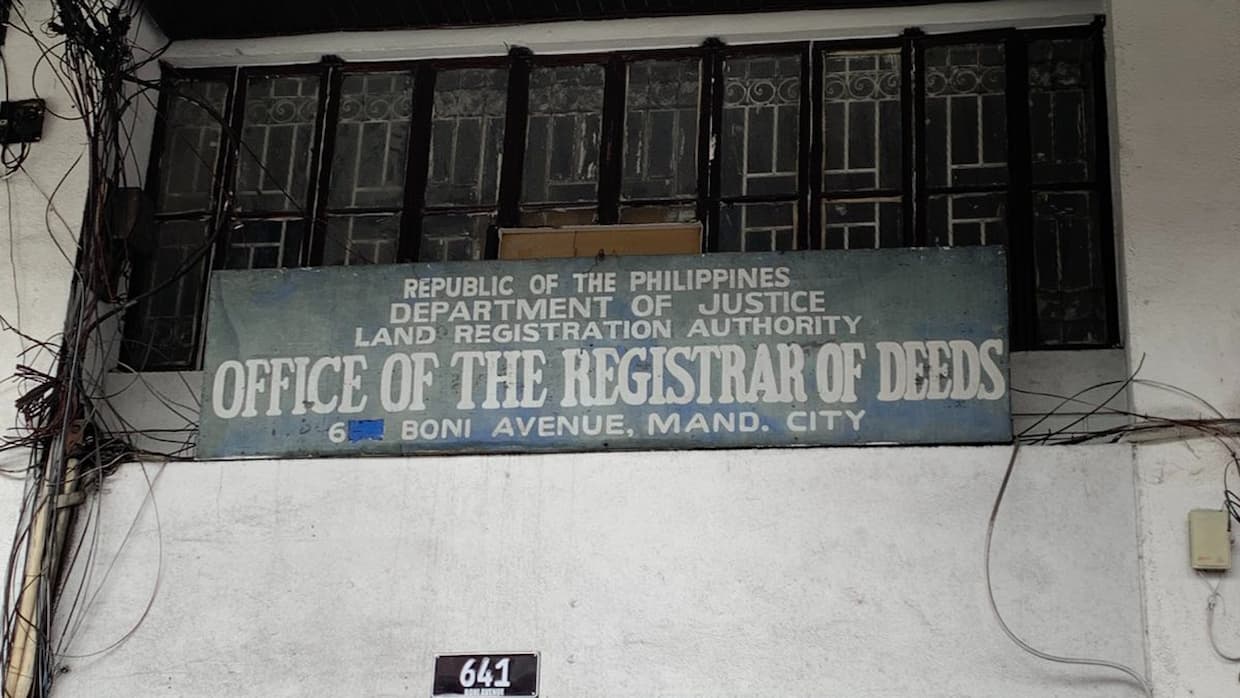

This article covers what you need to know about how to do a Philippine Land Title search.
You may need to do a search to verify the name of the Registered Owner, Transfer the Title into your own name, or secure a Certified True Copy of Land Title (CTC) because you have lost yours.
Unfortunately, there are no short cuts to getting a copy of a Philippine Land Title. If you are very, very lucky you may find the Land Title Online, via the Land Registration Authority (LRA) Serbiyso database.
Regardless there are many reasons why it is important to get a copy of the Title.
Below are some of those reasons:
- You are planning to buy a piece of land or property and you need to check the Certified True Copy Land Title (CTC) to make sure the person selling the land is the true owner.
- You want to take out a mortgage or loan and you need the Land Title for the Bank or Lender mortgage application.
- You want to check if there are any loans or Annotations on the property
- You need Technical Descriptions of the property
- The land has been left to you as part of an Inheritance and you need to transfer it into your name.
- You have lost your original Owner’s Title or it is damaged.
If you have lost your Owner’s Title and are trying to replace it, check out this detailed post on the only way to do it.
Or, click here if it is the Registry of Deeds who has lost its copy of your Title and you need to reconstitute it.

Send us an email with the details for
personalized recommendations or schedule a consulation if needed.
If you have already looked for the Land Title online and it is not available you will need to follow one of the processes I discuss below.
Often just getting information on a Philippine Land Title can be tedious and time-consuming. You will need a lot of sandwiches for this expedition!
And if you then need to secure a copy of a Land Title that takes more time!
How complicated or time consuming the process will be will depend on what information you already have, what you are trying to find out and why.
The Search process will be easier and quicker if:-
- You have the Land Title number; this identifies the property and is assigned by the Registry of Deeds
- You have copies of the Tax Declaration.
- You have the full address of the land.
 A Certified True Copy (CTC) of a Land Title is the ultimate evidence that you are the recognized Registered Owner.
There are different Land Title Search processes and what you will need to do is dependent on why you need the Title.
I have included links to my relevant articles about each process.
- The owner is deceased and the Land Title is in their name
You must settle their Estate first and then transfer the Title to your name. Read More Here
- The owner is alive and the Land Title is not in your name (e.g. you bought the land from them)
You must apply to the Registry of Deeds to Transfer the Title to your name and will be required to provide a Special Power of Attorney (SPA) from the Registered Owner allowing you to search for the Title. You will need copies of the Deed of Sale and BIR payment for transfer taxes. Then follow the process below set out in this article under Documents Needed for a Land Title Search.
- The Land Title is lost but is in your name
You must go through a Reissuance Court case Read More Here
- The Land Title is lost and is not in your name
You must go through a Reissuance Court case and either go through an Extrajudicial Settlement (EJS) and a Deed of Sale or other Transfer. You will need to submit the Deed of Sales, the BIR proof of payment of Transfer Taxes and property documents such as Tax Certifications. Read More Here
- The Registry of Deeds has lost the Land Title
You must go through a Reconstitution Court case. Read More Here
If you do not have a Land Title or you do not know if the land has been titled, then you will have to go to the Registry of Deeds and the City Assessor to find out what you need to provide to them, so they can advise which Land Title search process you will need follow.
If your circumstance is not covered above you can contact me for advice

There are different processes to follow depending on why you are doing a Land Title Search
There is really no easy way of doing a Title search. You may luck out searching for your Land Title online but the LRA database is still patchy. And you can’t just pick up the phone and ask for a Title to be checked for.
A search can be time consuming, often confusing and you will have to spend some money on Fees at each agency.
Philippine Land Titles are held at the Registry of Deeds or Municipality where the land is located, so it can also be frustrating if the land is not near where you live.
The reality is that you will need to start your search at the local government offices where the land is located.
This means that a Philippine Land Title search is a bigger problem if you live abroad.
If this is your situation, give someone a red-ribboned Special Power of Attorney (SPA) so that they can go to the agencies on your behalf. But understand they may have to spend several days visiting these agencies to check a Land Title and secure a Certified True Copy Land Title.

It will take time and effort to search for and verify a Land Title
There are many people who believe that it is enough to have a file full of Tax Declarations made and paid in their name to verify them as the Registered Owner.
But this is not the case.
All that does is confirm they paid Tax on the land. It is NOT ENOUGH by itself to prove Ownership of the Land.
The issuance of a Philippine Land Title is the ultimate evidence that you are the Recognized Land Owner.
If you are a buyer you should certainly make sure that the person selling land you want to buy is the Registered Owner.
Tax Declarations in their name are not enough!
You might have been given the Land Title number by the seller. Or even a photocopy of the Owner’s duplicate Title so that you can do your due diligence.
BUT Due Diligence includes making sure the Registered Owners name is the same on the Land Title AND the Tax Declarations provided. Even then I would urge you to go to the Registry of Deeds in person to verify a Land Title.
With the proliferation of fake Philippine Land Titles – estimates for General Santos alone is that there 10,000 fake Land Titles in circulation – and with rising property prices, it is necessary to make sure you are buying from the owner and not a conman.
Only Registered Owners and Heirs can apply for a Land Title Search, this includes an online, so you will need to get a Special Power of Attorney (SPA) from the seller giving permission for you to undertake the search.
When you have this SPA, go to the Registry of Deeds and the City Assessors and get Certified True Copies of the Title and the Tax Declaration.
Check to make sure that the name of the owner on these documents is the person selling the property to you.
Remember that to become the new owner of Philippine property, the Land Title has to be transferred into your name and it can only be transferred by the Registered Owner.

Verifying land title information can be tedious and time consuming depending on the information you have at hand
Potential Heirs may need to undertake a Philippine Land Title search because the property Title cannot be found or they need to find out who the Registered Owner is, as the property might be in another relative’s name instead of their parents name.
It is the Registered Owner who will determine who Inherits the land or property, so it is a top priority to find out.
The more documents or information you have the slightly easier the whole process is if you are doing a straight forward search!
Yes, I have the Land Title Number or Copy of the Owners Title
If you do have a Land Title number or copy of the Owner’s Title you will need to:-
- get an SPA from the Owner (if you are not the owner or an heir of the owner)
- fill up an application form at the Registry of Deed’s Office where the land is located
- pay for a Certified True Copy of Land Title
- return on a succeeding day when it is ready for collection.
I only have the Address
If you only have the property address and don’t have a copy of the Title at all, it becomes more difficult.
If you have the address, the best place to go is to the Tax Assessor’s Office at the at the Municipal City Hall where the property is located.
They can help you find the Title number so that you can then go to the Registry of Deeds. This can take several visits.
I only have a name!
Now, if you only have a name, you are in a bit of a pickle!
 If you only have a name to go by you are in a bit of a pickle!
For example: Say a mother and son had fought and weren’t speaking to each other. She later dies and the son Inherits everything. He knows his mother had several properties all over the Philippines but he cannot find his mother’s documents to prove ownership of them. And he doesn’t know the address of each property.
In this case, the sons only option really is to hire a professional.
It will take a lot of work and a lot of expense and in some cases it may be near impossible.
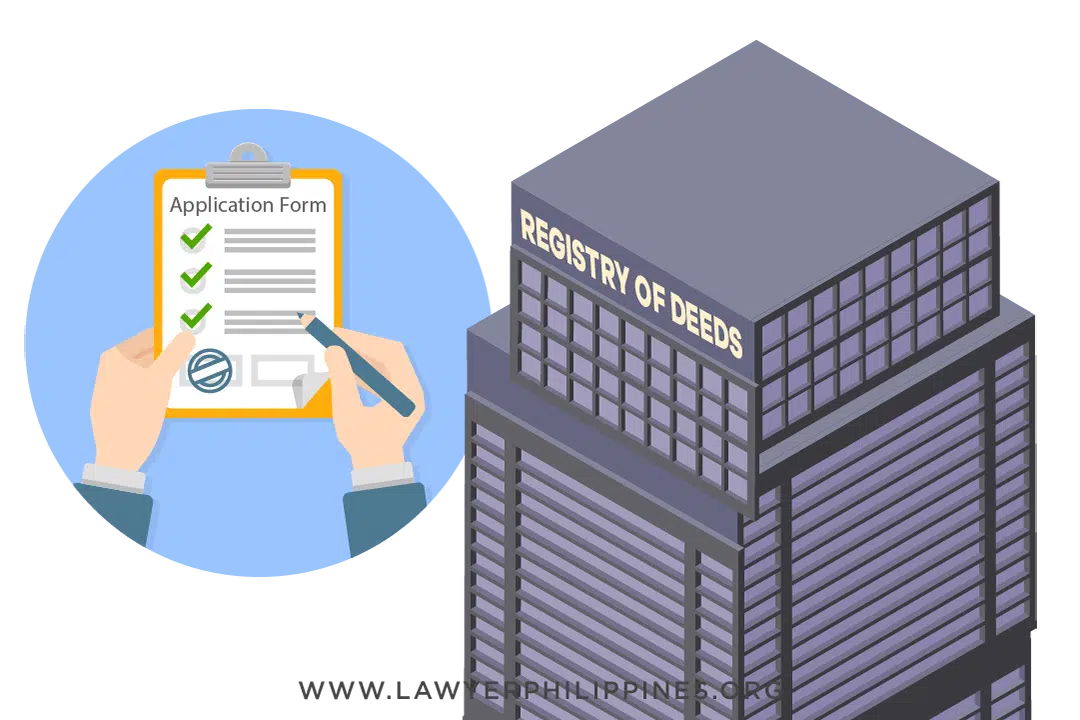
The Registry of Deeds is the primary government agency tasked with maintaining public records involving Land Titles
The main agencies most people will need to transact with are the Registry of Deeds and the Municipal Assessor Office.
But there are a few others depending on why you need a copy of your Title:
Registry of Deeds
As I have mentioned already you will need to visit the Registry of Deeds office local to where the land or property is.
It is possible that the Registry of Deeds website may be able to help with an online Land Title search or verification. So, it is always worth checking this first.
But these online land title records are patchy.
Expect to have to personally visit the Registry of Deeds as you will need to double check with the local Registry of Deeds if there is a negative result in the online database
Municipal or City Assessor’s Office
Property taxes are paid at the Municipal or City Assessor’s Office and are important proof regarding the ownership of the land.
If you are looking for further supporting documents on the ownership of the land, this is one of the places you must visit.
The Municipal or City Assessor’s Office will be able to give you the Tax Declarations for the property and update you if there are pending taxes to be paid.
Land Registration Authority (LRA)
The Land Registration Authority is the office which issues Certificates of Title, Decrees of Registration and other Registration Documents.
If you have previously transacted with the Registry of Deeds in relation to a Sale, Mortgage or Lease issue with your Title it is possible that it has already been converted to an eTitle and is on the LRA’s database. This means it is a lot easier for you to get a copy.
You can also apply to the LRA to convert your Original Certificate of Title to an e-Title under their Title Upgrade Program. You would need to visit the LRA or the Register of Deeds and submit a Conversion Request Form.
You would need the following documents:
- A copy of the Owner’s Duplicate Certificate of Title
- A valid Government-issued ID e.g. Driver’s License, GSIS, SSS, HDMF, PhilHealth, Passport, Postal ID
- A Special Power of Attorney (SPA) if you are an agent representing the registered owner.
- A duly notarized Secretary Certificate or Board Resolution if you are a corporation, which authorizes a representative to file the Conversion Request with the Registry of Deeds.
Also, you may need to visit the LRA if the local Registry of Deeds cannot help you.
Department of Agrarian Reform (DAR)
In some cases land has been affected by a Reform. Reform is where the government breaks up a parcel of land.
It is advisable to check at this Agency if you know that the area went through Agrarian Reform, in order to get the full picture of the land’s status.
Department of Environment and Natural Resources (DENR)
The DENR approves or disapproves the application of public land patents such as Homestead, Sales Patent and Free Patent. They can also advise on the nature of the land such as whether it is Alienable & Disposable (A&D), Forest Land etc.
If you are buying a plot of land with the plan to build on it, it is vital that you first check the land classification with the DENR office local to the land.
Additionally, the DENR stores the Cadastral Maps which can be very helpful.
This article is just a brief primer explaining how to do undertake a Philippine Land Title search and how and where to check for to verify property information.
Heirs:
When an Heir undertakes to verify a Land Title it helps them determine who all the Heirs (Compulsory Heirs) are.
In some cases Heirs believe the Land Title is in their parent’s name but then discover it is still in their grandparent’s name. This might be because their parents didn’t know they needed to have the Title transferred to their name or maybe they didn’t have the money to pay to transfer the Land Title into their Name.
Discovering that the Land Title is still in the grandparents name may mean there are now more Heirs than originally thought and the Estate will likely be shared to more people.
This is why it is important to transfer a Land Title into your name when you inherit Philippine Land or Property.
And in cases of Inheritance, all too often, Heirs don’t have any of the documents they need and so cannot figure out how to go about Settling their Estate.
Property Buyers:
Checking and verifying a Land Title before purchase protects buyers from being scammed.
We have seen cases of defrauded buyers all too often. Buyers who paid good money only to realize too late that they were not transacting with the Registered Owner but a scammer who had faked a Land Title.
Or buyers who have paid money for Land or Property, where the “owner” had provided copies of Tax Decs in their name but a Land Title in the name of their parent or Grandparent. Only for the buyer to find out that there were other Heirs who didn’t know the property was being sold or did not agree to sell it.
In such cases the buyer either loses both their money and the property or they face an expensive court case to try to get their money returned or persuade the other heirs to agree to the original sale.
People occupying the Land:
Other people who may be interested in the land are people who have lived on the land for a long time.
For them, the best course is to first go to City Hall and the Registry of Deeds to see what the Land Title Status is.
From there, one of the correct processes can be determined. If they believe they have a claim’ on the land they will most likely need to instruct a lawyer to assist them

There are other government agencies holding public records that may also be of help.
There are other agencies you can check with but the Registry of Deeds or the Tax Assessor’s Office (at the Municipality City Hall) are the most used.
You might need to check with other agencies for other concerns, especially if you are trying to trace the Land Title all the way back.
It will depend on what you want to accomplish as there are many reasons to check property information.
My Advice, whenever there is property involved, always check the title with the Registry of Deeds.
It gives you peace of mind!