Mortgage contracts in the Philippines

by | Updated: Jul 8, 2024 | Blog, Property Law, Mortgages and Encumbrances

A puzzle in the shape of a house, showing how people have a hard time understanding what a mortgage is.

An understanding of mortgage law is important before entering into any contract.

One of the problems with the law is that people don’t understand it.

Even lawyers, who have actually studied and practiced it for years, argue with each other about what the law means.
So it isn’t surprising that many people enter into a contract like a mortgage agreement without understanding that the provisions of that contract have limits fixed by law.

A mortgage is one of the kinds of contracts specially regulated by Philippine law. Because it is regulated, the signatories to a mortgage cannot just decide among themselves what their rights and obligations are in their mortgage contract. The terms of a mortgage contract should not violate the regulations set by the Civil Code of the Philippines or else those terms will be invalid.

It’s the sort of thing that gives rise to nasty and protracted litigation. This is one of the reasons why people entering into loan agreements, whether as debtor or creditor, should have a basic understanding of the law on mortgage contracts.

A locked house showing that improper mortgage contracts may lead to the loss of your property.

You’ll have problems if your mortgage contract is not valid.

What follows is not meant to be an exhaustive discussion of all aspects of the mortgage law, but a brief primer to enable anyone to understand its basic aspects. A simple mortgage contract is also included, and the comments are open for any questions.

Who are the parties to a mortgage agreement?

A mortgagor is the one whose property is offered as security. He must be the absolute owner of the property mortgaged. A mortgagee is the one who accepts the security of the property. The mortgagor is typically the debtor and the mortgagee is typically the creditor.

A picture of different people as there can be several parties to a mortgage contract.

Who are the parties to a mortgage?

However, third persons who are not parties to the principal obligation may secure it by mortgaging their own property.

What is a mortgage?

A mortgage is a contract through which a debtor gives security for the fulfillment of a principal obligation to a creditor. This is done by designating an immovable property (like a house and lot) or real rights over immovable property as answerable for the principal obligation. In case that obligation is not fulfilled in the time agreed on, the designated property or rights will be publicly auctioned and the obligation shall be satisfied with the proceeds of the sale.

Shaking hands over an approved mortgage contract.

What is a mortgage contract?

The essence of a contract of mortgage indebtedness is that a property has been identified or set apart from the mass of the property of the debtor-mortgagor as security for the payment of money or the fulfillment of an obligation to answer the amount of indebtedness, in case of default of payment.[1]

A valid mortgage should be annotated on the Title to the property at the Register of Deeds in order to be valid against third persons (those not party to the contract), and so create a real right enforceable against the whole world.
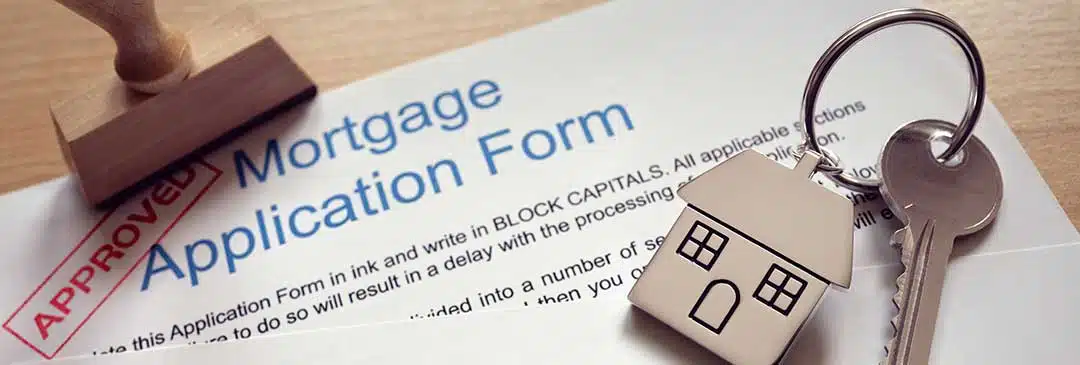
An approved mortgage application should be annotated at the Registrar of Deeds.

Annotate the Title at the Registrar of Deeds.

The mortgage follows the property regardless of change of ownership or possession. This means that, even if the mortgaged property passes into the ownership or possession of someone other than the mortgagor, the mortgagee still has a right to satisfaction from the property if it is foreclosed.

What does a mortgage do to the property?

The real nature of a mortgage is described in Article 2126 of the Civil Code:

Art. 2126. The mortgage directly and immediately subjects the property upon which it is imposed, whoever the possessor may be, to the fulfillment of the obligation for whose security it was constituted.

Cash and a house being exchanged show that the mortgage follows the property.

Mortgage is attached to the property.

A mortgage creates a real right which follows the property even if the property is transferred by the mortgagor to someone else. The sale or transfer of the mortgaged property cannot affect or release the mortgage. A transferee is necessarily bound to acknowledge and respect the mortgage. In fact, the mortgage on the property may still be foreclosed despite the transfer:

Art. 2129. The creditor may claim from a third person in possession of the mortgaged property, the payment of the part of the credit secured by the property which said third person possesses, in terms and with the formalities which the law establishes.
New owners will be obligated to pay off any existing mortgages.

Mortgage is the responsibility of any new owner.

What is more, a mortgage has a full scope. A mortgage covers not just the property by itself, but also extends to the natural accessions, to the improvements, growing fruits, and the rents or income not yet received when the obligation becomes due. It also covers to the amount of the indemnity granted or owing to the proprietor from the insurers of the property mortgaged, or in virtue of expropriation for public use, with the declarations, amplifications and limitations established by law, whether the estate remains in the possession of the mortgagor, or it passes into the hands of a third person.[2]

What are the requirements for a mortgage?

(1) A mortgage is an accessory contract to a principal obligation. In order to exist, a mortgage must be constituted to secure the fulfillment of that principal obligation;

(2) The mortgagor must be the absolute owner of the thing pledged or mortgaged;

(3) The persons constituting the mortgage must have the free disposal of his property, or be legally authorized for the purpose.

A checklist as some requirements must be met for a mortgage to occur.

A few simple requirements for mortgage.

Third persons who are not parties to the principal obligation may secure the latter by pledging or mortgaging their own property.[3]

What is the form of a mortgage contract?

It is a written contract. It is indispensable that the document in which the mortgage appears to be recorded in the Registry of Property (this makes it enforceable against the whole world). If it is not recorded, the mortgage is nevertheless binding between the parties.

A lady writing on a computer as a mortgage is a written document.

A mortgage is a written document.

The contract should be notarized in order to be a public document. When having it notarized, the parties should each appear in person before a notary public and present valid identification bearing their photograph and signature. (A community tax certificate (CTC) or sedula is by itself not considered competent identification.) If these rules on identification and notarization are not followed, the authenticity of the mortgage contract might be denied by one of the parties.

What does a mortgage contract look like?

This is an example of a very simple, but valid mortgage contract. It is important to note that mortgage contracts can be written simply or in greater detail to reflect the particular agreement of the parties and the specific protections that they want to add or include.

A pen at the signature line. A sample mortgage contract can be found here.

A pen at the signature line of a contract.

It is also important to remember that a mortgage agreement should be annotated on the Title to the property at the Register of Deeds in order for it to be effective against persons who are not a party to the contract.

Download Sample Mortgage Agreement

Is there such a thing as an unwritten mortgage?

Yes, but only in particular situations.

There are specific situations where the law deems a mortgage to have been constituted even absent the formal requirements. In such a case, there is deemed to be an “equitable mortgage”.

A contract to sell to secure a debt is an unwritten mortgage.

Sometimes, an unwritten mortgage will occur.

An equitable mortgage has been defined as one which although lacking in some formality, or form or words, or other requisites demanded by the law, nevertheless reveals the intention of the parties to charge real property as security for a debt, there being no impossibility nor anything contrary to law in this intent.[4]

A situation is deemed an equitable mortgage where:

  1. the parties entered into a contract denominated as a contract of sale; and,
  2. their intention was to secure an existing debt by way of a mortgage.

A house beside a stack of coins to illustrate an unwritten mortgage.

Examples of unwritten mortgages are below.

Article 1602 of the Civil Code provides examples of such situations:

The contract shall be presumed to be an equitable mortgage, in any of the following cases:

(1) When the price of a sale with right to repurchase is unusually inadequate;

(2) When the vendor remains in possession as lessee or otherwise;

(3) When upon or after the expiration of the right to repurchase another instrument extending the period of redemption or granting a new period is executed;

(4) When the purchaser retains for himself a part of the purchase price;

(5) When the vendor binds himself to pay the taxes on the thing sold;

(6) In any other case where it may be fairly inferred that the real intention of the parties is that the transaction shall secure the payment of a debt or the performance of any other obligation.

In any of the foregoing cases, any money, fruits, or other benefits to be received by the vendee as rent or otherwise shall be considered as interest which shall be subject to the usury laws.

Key in an unlocked door to denote rental, which is considered interest in an unwritten mortgage.

Anyone of the above makes the transaction an unwritten mortgage.

Anyone of the circumstances laid out in Article 1602 is sufficient to support the conclusion that a contract of sale is, in fact, an equitable mortgage. This approach follows the rule that when doubt exists on the nature of the transaction, the law favors the least transmission of property rights.[5]

What happens in case the debtor fails to pay the principal debt secured by the mortgage?

There is a misconception that, if the mortgagor is unable to pay, the property immediately passes into the ownership of the creditor. This is not so.

A demand should be made on the mortgagor to pay the debt due. If he fails, then the property can be foreclosed.

A foreclosed house, as the debt could not be paid.

When the mortgagor cannot pay, a house can be foreclosed.

There are two modes of foreclosure, judicial and extra-judicial (although in fact they both make use of the Court’s offices), each with their own particular procedures.

The effect of foreclosure is not that the mortgagee becomes the owner of the property, but that the property is put up for public auction. It is through bidding at the public auction that the mortgagee can eventually become the owner of the property.


Atty. Francesco C. Britanico

References

[1] Ocampo vs. Land Bank of the Philippines, G.R. No. 164968, July 3, 2009
[2] Article 2127, Civil Code
[3] Article 2085, Civil Code
[4] Rockville Excel International Exim Corp. vs. Spouses Culla, G.R. No. 155716, October 2, 2009
[5] Rockville Excel International Exim Corp. vs. Spouses Culla, G.R. No. 155716, October 2, 2009

37 Comments

  1. Nora gonzaga

    Hi Atty, my father is currently tenant to agricultural land(coconut farm) for about 20years. There is no written agreement on my father possession stating that he is a legal tenant, rather an oral agreement. The owner & his husband was dead, the legal heir also dead which was found to be the only son with 1 child(now on legal age). We dont have any contact on them. Here is my case
    1. There is a person (an old customer on coconut crops) claiming that the owner had mortgage all the 3 hectares coconut fruits to him by the owner. How can we verify?
    2. What is the right of my father with regards to harvest of coconut on the said farm?
    3. Is is legal for the claimer to get all the coconut harvest without giving my father any share?

    Reply
    • Atty. Francesco C. Britanico

      Hello. This is very complicated situation you and your father. A person claiming that the landowner mortgaged the coconut harvest must show proof. Oral claims alone are not legally binding unless corroborated by witnesses or records. You can verify by checking the Registry of Deeds if the mortgage is recorded. As for the tenancy of your father, under the law, it can be established even by oral agreement provided there is proof of continuous possession and sharing harvests. As for the legality of the claimant taking all harvest. No, it is not legal for the claimant to take all the coconuts without giving your father his rightful share.

      It is wise to bring this situation to a lawyer that will give you legal advice.

      Reply
  2. Estrella Hill

    In 2019, a parcel of land was sold in an auction sale to execute the CIAC judgment award in favor of the creditor against the debtor. The property had been previously mortgaged by the debtor to a certain Philippine Savings Bank to secure a loan.

    The creditor acquired the property as a result of the auction sale. A year elapsed after the auction sale without the debtor having redeemed the property. Thus, the sheriff executed a Certificate of Sale in favor of the creditor, and the said Certificate of Sale was annotated on Land Registry title

    In April of this year 2025, the Sheriff served official notice upon the Savings Bank regarding the sale at public auction of the said property and the lapse of one year thereafter without the debtor having redeemed the property. The said notice informed the Savings Bank that the latter’s rights as a mortgagee are subject to the rights of the creditor under the law such as, but limited to, the right to be notified in case of the foreclosure of the mortgage in favor of the Savings Bank over the property, the right to redeem the property should the property be foreclosed, and the right to own and possess of the property upon the release of the mortgage. The notice also directed the Savings Bank to give the creditor, within five days, an update on the status of debtor’s loan obligation. In compliance with the directive, the Savings Bank gave the creditor an update on the status of the debtor’s payments.

    The creditor decided that she would like to pay off the remaining loan obligation of debtor so that the title to the property could be consolidated in the creditor’s name as the winning bidder. For this purpose, in May 2025, she sent an e-mail to the Loans Accounting Department of the Savings Bank requesting for a statement of account. The creditor however has not yet received any statement of account from the Savings Bank to this day.

    When my lawyer followed up the matter with the Loans Accounting Department, my lawyer was told that they are waiting for the advice of the legal department on the matter before sending the statement of account to the creditor.

    My lawyer sent an email to the Bank’s legal department to follow up the matter and to ask the Bank’s the advice to the Loans Accounting Department regarding the request of the creditor for a statement of account. What do you think is causing this delay? Will the bank decide in our favor? Please help….

    Reply
  3. Lin Velarde

    Which agreement is appropriate to this scenario? A Conditional Sale or a Mortgage Agreement? If none of them, which one? What other documents must be attached to the agreement.

    The parties are relatives:
    1. Seller (Mortgagee) agrees to give Buyer (mortgagor) full possession of the property.
    2. Buyer pays 1/3 of the agree purchase price as down payment.
    3. Seller agrees for Buyer to pay the remaining balance of purchase price in installment basis – payable in 4 installments over a period of eight years.

    Reply
    • Atty. Francesco C. Britanico

      A mortgage applies when the buyer already owns the property and uses it as a collateral for a loan. under the conditional sale, the seller gives the buyer possession of the property after a down payment., while ownership or title is transferred once the buyer completes all the installment payment. in your case, conditional sale agreement is more appropriate than mortgage.

      Reply
  4. Siau soon Lim

    if the property is co-owned by 3 persons. Can 2 of them mortgage the property to secure a bank loan without the consent of the other 1 owner?

    Reply
    • Atty. Francesco C. Britanico

      No, two co-owners cannot validly mortgage the entire co-owned property without the consent of the third co-owner. The tow- co-owners may mortgage their combined share but the mortgage cannot bind the other one-co-owner share.

      Reply
  5. Jen

    Atty,
    My grandma has a property mortgaged to her neighbor year 2008, by year 2018 my family wanted to pay the total debt to take back the property, but the mortgagee refused. Unknowingly the property was already mortgaged by other person year 2017. Is it legal that a mortgagee mortgaged the property to someone else without our knowledge? Can we take back the property?

    Reply
    • Atty. Francesco C. Britanico

      This is an urgent legal matter and consult with a property lawyer immediately.

      Reply
  6. She

    Due to high interest rates, my husband and i considered to have our loan with a bank taken out. That is when we found out that said bank failed to annotate our title, now they want us to wait for the title to be annotated before they can allow the loan take out. Is this right?

    Reply
    • Atty. Francesco C. Britanico

      You may coordinate with the bank and ask them to process the annotation immediately. It is important also to consider that each back has their own rules, and procedure in this kind of matter. You may also follow up with the Registry of Deeds if the annotation is pending or were incomplete. If the bank’s negligence causes financial loss, you may consult a lawyer about possible claims.

      Reply
  7. Marijoe Yu

    Hello Atty. BRITANICO,

    Can a foreshore land be subject to a mortgage?
    IF THE FORESHORE LAND IS COVERED BY A TAX DECLARATION CAN THIS BE LEGALLY FORECLOSED IF THERE IS A REM or is the mortgage Null and void from the beginning because it is not a valid mortgage?

    thank you.

    Marjoe Yu

    Reply
    • Atty. Francesco C. Britanico

      Foreshore lands are part of the public domain and cannot be privately owned, mortgaged, or foreclosed. A tax declaration covering foreshore land is not proof of ownership, so any mortgage or Real Estate Mortgage over it is generally null and void from the beginning.

      Reply
  8. Debie

    Hi. What will happen to rem if forclosed? Does the mortgagee becomes the owner?

    Reply
    • FCB Law

      The property is auctioned to pay for the obligation.

      Reply
      • Maria Rosales

        What happens to an immovable property that was mortgaged since 1980s and the not married owner already passed away?

        Will the principal amount increase? How to make settlement?

        We do not know who mortgaged it as it’s not stated in the annotation of the tax declaration, only the date, principal amount the name of the bank, and the who signed but no details who mortgaged it. We do not have the notarized documents either.

      • Atty. Francesco C. Britanico

        To determine if the land title was mortgage it is annotated in the CTC not on the Tax declaration. Since the mortgagor is deceased, the obligation becomes part of the estate. Heirs inherit both the property and the debt attached to it. The principal itself does not automatically increase. What usually grows over time are interest, penalties, and surcharges if the loan was never settled. In this case, seeking a lawyer is the course of action. The lawyer will assess your situation and establish an appropriate legal measure.

  9. Wena

    Atty,
    Is Extrajudicial Settlement of Estate with Mortgage valid

    Reply
    • FCB Law

      It can be. Lacking details, we can only speak in general.

      Reply
  10. Tom

    Atty.,

    If the proceeds of the auction is greater than the debt, to whom will the excess be given?

    Thanks,

    Tom

    Reply
    • Atty. Francesco Britanico

      To the debtor.

      Reply
    • Shine

      Good afternoon atty, the land was mortgage in 2019. The title is now in mortgagee but owner’s name written in the title was wrong and his now dead. Does mortgagee has right to claim the property?thankyou

      Reply
      • FCB Law

        The property would have to go through auction before the mortgagee could come into ownership of it.

  11. Gene

    Can a mortgaged property be rented out?

    Reply
    • lawyerphilippinesadmin

      Yes.

      Reply
  12. bon

    atty, land was mortgage in the 90s, no written document, the title is with the mortgagee, the owners are now dead. the heirs wanted to redeem the property, can they recover it?

    Reply
    • Lawyers in the Philippines

      Sent an email.

      Reply
  13. ROMMEL

    Atty., after a year I am a good payee to my home mortgage, when they issue the new interest rate I calculated that I can no longer be able to pay as it will heavily affect me and my family financially. I decided not to issue another sets of checks and inform the bank and the agent that I will surrender the house and fully understand that all my previous payment are deemed profit. But the bank insist that I have to pay another month as my mortgage cancellation is still on process. Do I have to do another payment in the future?
    Sincerely,

    -Mel

    Reply
    • Lawyers in the Philippines

      It will depend on the agreement between you and the bank.

      Reply
    • Ana Official

      Hi Atty,
      The term of my loan ended last March 30, 2021. But the bank refused to release the land title as my collateral after paying the whole amount because accordingly I signed a mortage agreement that my collateral will be released by December 2021. Is their such a way that i can get back my title before December considering that already have fully paid my loan?

      Reply
      • Atty. Francesco Britanico

        We suggest first elevating it within the bank.

  14. Krizia

    Hi Atty,

    My sister and father have entered into a mortgage. My father is OFW and is 60 yrs old at the time or mortgage. Now they are unable to make the payment but they aren’t willing to refund the $80,000.00 3 mons payment. it is PHP21,000 per month. My sister works in a call center company and doesn’t earn much. – her salary is PHP 25,000/mo gross. I believe that there is a negligence of the assessment of the mortgage because they shouldn’t have been approved in the first place.

    Reply
    • Lawyers in the Philippines

      Given the situation has already developed, then you must take this up with the lending institution that extended the mortgage. It may be possible to negotiate with them.

      Reply
  15. Jay garcia

    Atty, can a US citizen enter into a mortgage contract as the mortgagee? Therefore will own the land if foreclosed

    Reply
    • Lawyers in the Philippines

      A foreign citizen can only own land when they inherit it through intestate succession.

      Reply
    • Marvin P Foningor

      Atty, i contracted to an agreement on land mortgage. Is it valid if it was done through written method and the details of the said land was not included on the written agreement? On what account to become valid? Thank you

      Reply
      • FCB Law

        Yes, it can be enough if it identifies the property sufficiently. It has to be recorded at the register of deeds to be binding on third persons.

Submit a Comment

Your email address will not be published. Required fields are marked *

Share This